
In every production plant, there is a decisive moment. The bottle is filled, almost ready to meet the market and then comes the closure.
Choosing a capping system is one of the most critical investment decisions in a packaging facility, despite the fact that it isn’t the most prominent machine on the line. Whether you are running a high-volume beverage plant or a specialized, low-speed pharmaceutical line, the objective remains the same: ensuring that the equipment operates continuously to minimize downtime.
A capper might appear to be just another machine in the line, but in reality, it is the final guardian of product integrity. A poorly selected capping system can lead to jams, inconsistent torque application, product losses, constant production interruptions, and most important, compromised seal integrity, ultimately affecting the product’s quality.
Product and closure characteristics
The first step when choosing a capping system is about the container and the closure. It is not the same to cap a 5 gallon bottle at it is to close a yogurt and the same applies to the wide range of caps available on the market.
Today’s packaging lines may handle screw on cap, snap on, flip-top, sport caps, trigger or pump, over caps, twist-off, threaded caps, ROPP caps, etc. Each of these designs requires a specific handling method and capping technology.
For this reason, defining the closure characteristics is essential. Diameter, height, material, structure, will determine the most suitable capping system. Any capping manufacturer will need this information before providing a quotation
Machine performance: torque, heads and production speed
Once the container and the cap are defined, the next step is to know the performance requirements of the line.
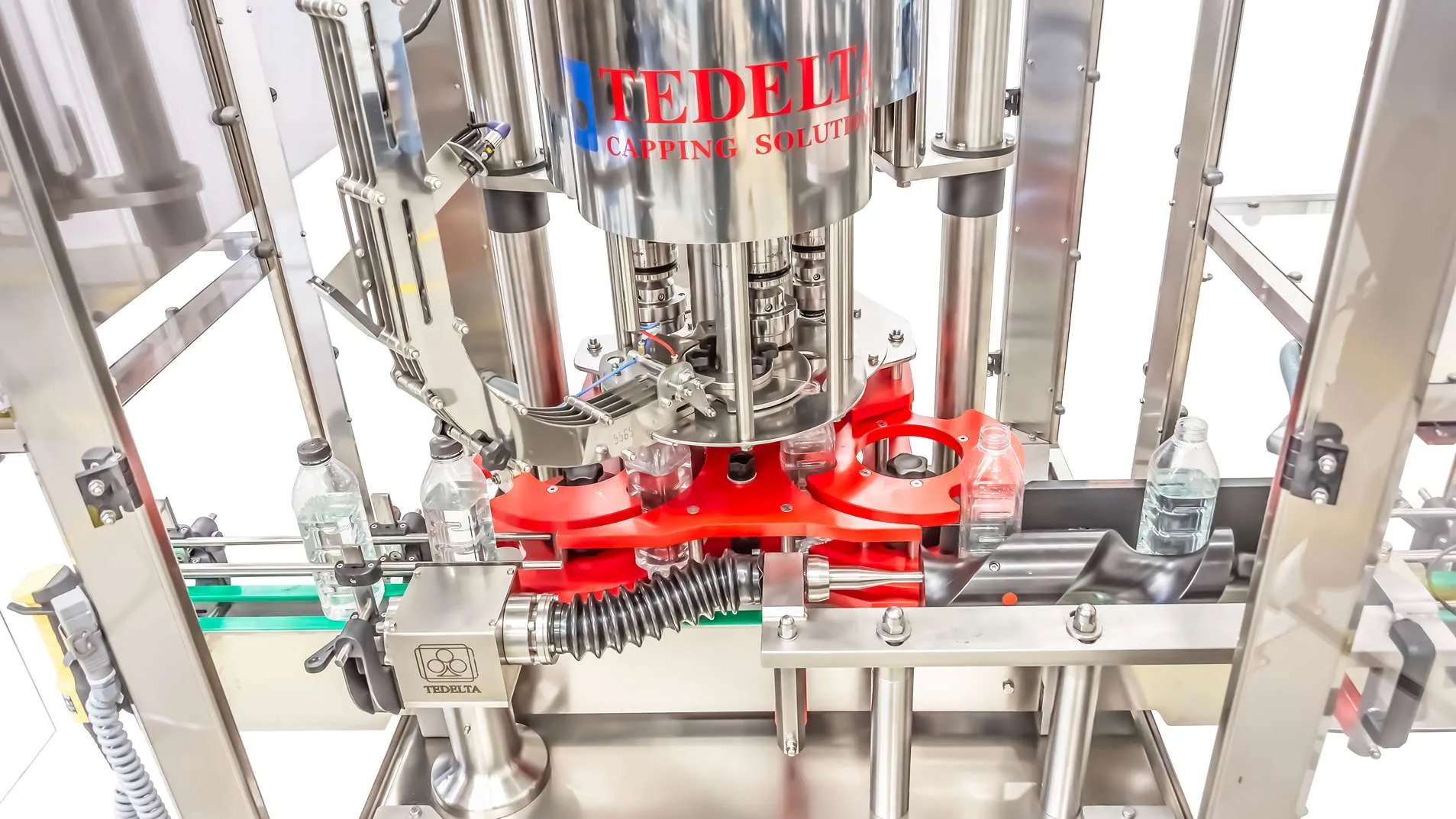
The heart of every capping machine is the capping head. If the chuck or capping head is the gripping tool that fits over the cap, torque is the controlled rotational force that tightens it. Applying the correct torque is essential: too little force may compromise the seal, while excessive torque can damage the closure or the container.
Consistent torque application ensures every product leaving your facility is ready for the market.
Different closures require different capping technologies. A screw cap, a pump dispenser, and a ROPP aluminum closure cannot be handled in the same way, and each requires its own specialized capping head design.
Production speed is another key factor. A machine running at 600 bottles per minute must be as composed and reliable as one operating at 20. The required output will determine the number of capping heads needed.
For very small productions, semi-automatic capping machines can be sufficient. These systems require an operator to place the bottle and the cap before the machine performs the tightening operation.
As production increases, fully automatic systems become necessary. Inline capping machines are often the entry point for automation, typically reaching capacities of around 3,000 bottles per hour. For higher speeds, rotary capping machines take over, capable of handling outputs from several thousand up to 60,000 bottles per hour depending on the number of heads installed.

System design: where efficiently is really defined
The true efficiency of a capping system lines in its overall design. Many production interruptions are due to surrounding systems that support the process.
One of the most critical elements is the cap feeding system. If the capping heads are the muscles of the machine, the feeding system is its circulatory system. Its role is to continuously deliver caps to the machine without interruption.
A well designed feeding system sorts, orients, and delivers closures in the correct position before they reach the capping head.
Equally important are cap orientation and alignment systems, which ensure that every closure arrives correctly positioned before being applied. From there, chutes guide the cap precisely to the capping head either by Pick up and Place or Pick-off system.
Versatility is another important aspect of modern capping systems. Many producers need to run multiple bottle formats or different closures on the same line. In those situations, quick changeover parts and flexible machine configurations become essential to reduce downtime between formats.
Hygienic design also plays a key role, especially in industries such as food, beverages, cosmetics, or pharmaceuticals. Stainless steel construction, accessible components, and easy cleaning procedures help maintain the highest sanitary standards.
Finally, control and reliability complete the system. Modern cappers often include HMI interfaces with recipe memory and data logging, allowing operators to manage multiple formats easily. Sensors and rejection systems detect misaligned caps or improperly closed containers before they continue down the line.
Maintenance must also be considered from the beginning. The most expensive machine is the one that requires a specialized technician every week. A capper should offer robust mechanical construction and predictable maintenance routines so production teams can focus on efficiency.
A well designed capper behaves like a trained athlete: powerful, disciplined, and consistent. It performs every day without drama. And in a modern production plant, that consistency is not just a technical advantage, it is a competitive one.
With decades dedicated exclusively to capping technology, manufacturers who specialize in this field understand that the true value of a capper is not only in how fast it runs, but in how reliably it performs day after day on the production floor.
